Our Three Step Process
March 3, 2026
How the South Dakota v. Wayfair Case Impacts Your Amazon Business
Our Three Step Process
March 3, 2026
How the South Dakota v. Wayfair Case Impacts Your Amazon Business
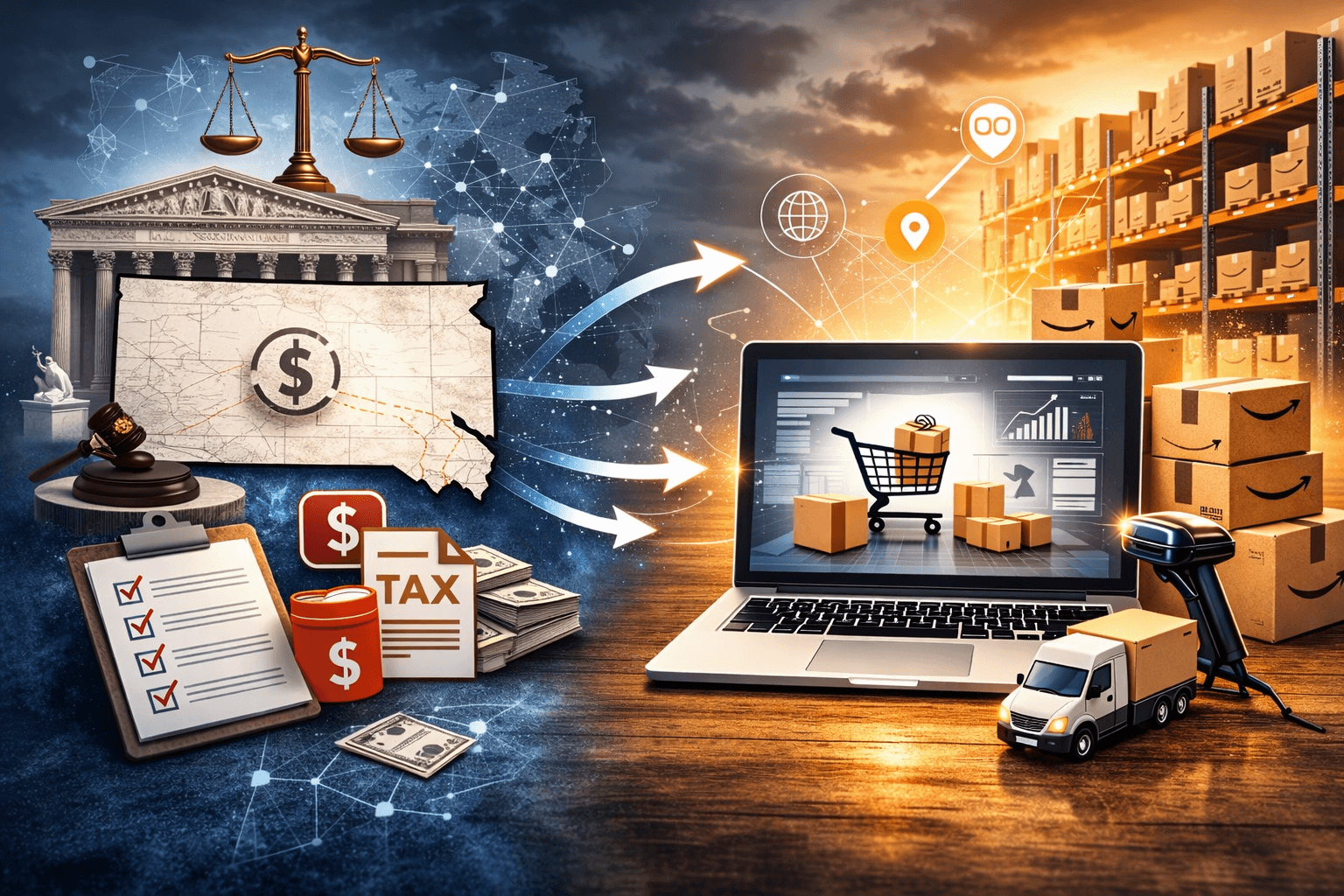
For Amazon businesses, a Supreme Court case has changed the online selling landscape. The 2018 South Dakota v. Wayfair's decision placed a new web of responsibilities onto every online seller's dashboard. That’s why, understanding the full scope of the South Dakota v. Wayfair ruling is essential for the legal standing of your business and its financial health.es Search Engine Optimization (SEO).
What Does the South Dakota v. Wayfair Case Mean for Amazon Sellers?
Before the South Dakota v. Wayfair case, states could only collect sales tax from businesses that had a physical presence in that state, for instance, a warehouse or store, etc. This is why the early days of e-commerce often felt like a tax-free zone.
However, South Dakota v. Wayfair’s decision had a massive impact on how e-commerce evolved. It endorsed the concept of economic nexus.
In simple words, it means a substantial amount of sales revenue or a high number of transactions into a state are enough to create a tax obligation on a business regardless of its physical presence in any shape or form.
Two Sets of Rules for Amazon Sellers
The impact of the South Dakota v. Wayfair decision on Amazon businesses is uniquely complex because as an Amazon seller, you must navigate two parallel systems:
Every state with a sales tax has now established economic nexus thresholds. These thresholds vary but commonly start at $100,000 in sales or 200 transactions into a state in a year. With Amazon's vast customer base, even small to medium-sized sellers can easily hit these thresholds in multiple states.
The older rule still applies with full force. If you use Fulfillment by Amazon (FBA), your inventory placement creates a classic physical presence in dozens of states. So, you might owe tax collection duties in a state because Amazon stores your products there, even before your sales to customers in that state hit a significant economic threshold.
What Actionable Steps Should You Take?
Here is how to build a system post Wayfair and keep your online business sustainable:
Determine Your Economic Nexus
Your first task is data collection. Cross-reference two key reports from Seller Central including your marketplace tax collection report and your FBA inventory logistics report to see where you exceed economic thresholds.
Secure Your Permits Legally
Each state where you have an established nexus requires an application for a sales tax permit or license. Register for the permit before you begin tax collection as it prevents significant legal and financial penalties.
Setup Automated Tax Collection
Manually calculating rates for thousands of jurisdictions is impossible. Amazon’s Tax Calculation Service is a strong starting point, integrated directly into your listings. For more complex needs, you can switch to third-party solutions like Vertex or TaxJar.
File and Remit
Collecting tax is only step one. You must file returns and remit the taxes on each state's monthly, quarterly, and annual schedules. Consider paid automation services or hire a specialist to handle the filing complexities.
Turning Compliance from Cost to Business Advantage
The South Dakota v. Wayfair mandates, when managed well, can become a part of operational excellence in your business.
Build on a Solid Foundation
If you're compliant and competitors are not, they risk major back-tax liabilities and penalties. Your compliant business is more sustainable.
Improve the Customer Experience
Transparency in tax calculation at checkout is a hallmark of a professional, trustworthy brand.
Operate with Confidence
Proactive management frees you from the anxiety of audits, allowing you to scale with clarity.
Conclusion
The South Dakota v. Wayfair ruling formalized the economic reality for Amazon sellers, testing their abilities to build a scalable and defensible business model. However, it is better to consult with an e-commerce tax professional who helps you stay compliant and competitive in the post-South Dakota v. Wayfair landscape.
While tax professionals handle nexus and compliance, Treszon builds your competitive advantage through comprehensive full account management on Amazon. Partner with Treszon to strengthen your Amazon business.
For Amazon businesses, a Supreme Court case has changed the online selling landscape. The 2018 South Dakota v. Wayfair's decision placed a new web of responsibilities onto every online seller's dashboard. That’s why, understanding the full scope of the South Dakota v. Wayfair ruling is essential for the legal standing of your business and its financial health.es Search Engine Optimization (SEO).
What Does the South Dakota v. Wayfair Case Mean for Amazon Sellers?
Before the South Dakota v. Wayfair case, states could only collect sales tax from businesses that had a physical presence in that state, for instance, a warehouse or store, etc. This is why the early days of e-commerce often felt like a tax-free zone.
However, South Dakota v. Wayfair’s decision had a massive impact on how e-commerce evolved. It endorsed the concept of economic nexus.
In simple words, it means a substantial amount of sales revenue or a high number of transactions into a state are enough to create a tax obligation on a business regardless of its physical presence in any shape or form.
Two Sets of Rules for Amazon Sellers
The impact of the South Dakota v. Wayfair decision on Amazon businesses is uniquely complex because as an Amazon seller, you must navigate two parallel systems:
Every state with a sales tax has now established economic nexus thresholds. These thresholds vary but commonly start at $100,000 in sales or 200 transactions into a state in a year. With Amazon's vast customer base, even small to medium-sized sellers can easily hit these thresholds in multiple states.
The older rule still applies with full force. If you use Fulfillment by Amazon (FBA), your inventory placement creates a classic physical presence in dozens of states. So, you might owe tax collection duties in a state because Amazon stores your products there, even before your sales to customers in that state hit a significant economic threshold.
What Actionable Steps Should You Take?
Here is how to build a system post Wayfair and keep your online business sustainable:
Determine Your Economic Nexus
Your first task is data collection. Cross-reference two key reports from Seller Central including your marketplace tax collection report and your FBA inventory logistics report to see where you exceed economic thresholds.
Secure Your Permits Legally
Each state where you have an established nexus requires an application for a sales tax permit or license. Register for the permit before you begin tax collection as it prevents significant legal and financial penalties.
Setup Automated Tax Collection
Manually calculating rates for thousands of jurisdictions is impossible. Amazon’s Tax Calculation Service is a strong starting point, integrated directly into your listings. For more complex needs, you can switch to third-party solutions like Vertex or TaxJar.
File and Remit
Collecting tax is only step one. You must file returns and remit the taxes on each state's monthly, quarterly, and annual schedules. Consider paid automation services or hire a specialist to handle the filing complexities.
Turning Compliance from Cost to Business Advantage
The South Dakota v. Wayfair mandates, when managed well, can become a part of operational excellence in your business.
Build on a Solid Foundation
If you're compliant and competitors are not, they risk major back-tax liabilities and penalties. Your compliant business is more sustainable.
Improve the Customer Experience
Transparency in tax calculation at checkout is a hallmark of a professional, trustworthy brand.
Operate with Confidence
Proactive management frees you from the anxiety of audits, allowing you to scale with clarity.
Conclusion
The South Dakota v. Wayfair ruling formalized the economic reality for Amazon sellers, testing their abilities to build a scalable and defensible business model. However, it is better to consult with an e-commerce tax professional who helps you stay compliant and competitive in the post-South Dakota v. Wayfair landscape.
While tax professionals handle nexus and compliance, Treszon builds your competitive advantage through comprehensive full account management on Amazon. Partner with Treszon to strengthen your Amazon business.
Other Blogs
Other Blogs
Check our other project Blogs with useful insight and information for your businesses
Other Blogs
Other Blogs
Check our other project Blogs with useful insight and information for your businesses